Thomson Reuters names eight Keystone Law partners in its Stand-out Lawyers Guide 2026
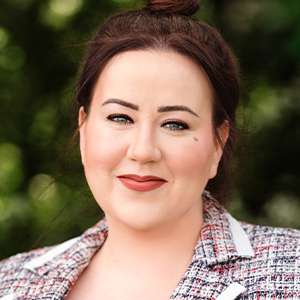

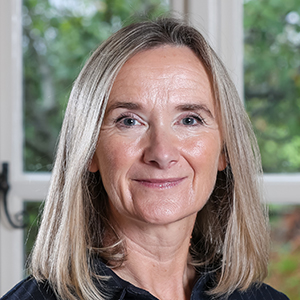
Andrea James, Andrew Darwin & Anna McKibbin
Keynote
23 Jul 2025
•4 min read
On July 24 July, the UK’s High Court will hear the latest in a series of cases brought around the world on the status of inventions generated using AI.
Several years before to the recent surge in the capabilities of generative AI tools like ChatGPT, an AI system was devised by Dr. Stephen Thaler capable of autonomously generating inventions. What followed were a series of patent applications around the world to protect inventions by the AI called DABUS (‘Device for the Autonomous Bootstrapping of Unified Sentience’). Most patent systems require an application to name the inventor of the invention for which patent is sought; in each case, DABUS was listed as the sole inventor.
The case facts
The last outing for DABUS in the UK courts concluded with the UK Supreme Court confirming in its decision in Thaler v Comptroller-General of Patents [2023] UKSC 49, that the Patents Act 1977 requires a human inventor to be named in a patent application. This week’s appeal before the High Court follows the refusal of the UK Intellectual Property Office of a patent application which, following the UK Supreme Court decision, was amended to include the necessary human inventor, Dr. Thaler.
The High Court will be asked to decide two types of issues in the appeal:
The first set of issues will be watched closely by patent practitioners in the UK and have general relevance to civil procedure. The broader issues around the approach to AI assisted inventions will be of wider interest, as jurisdictions around the world are grappling with the rapid advances in AI and its ability to accomplish what previously had been the domain of human inventors.
The original patent application for the invention conceived using DABUS named only the AI system as an inventor; signifying that Dr. Thaler, the applicant, believed DABUS to be the inventor. What constitutes the inventor of an invention varies between jurisdictions (and as noted below, is of lesser importance in some patent systems). The US system is at the higher end of the scale, requiring that the inventor is the one who ‘conceived’ the invention, conception being:
“…the formation in the mind of the inventor of a definite and permanent idea of the complete and operative invention as it is thereafter to be applied in practice…” (Townsend v Smith, 36 F.2d 292, 295, CCPA 1929)
What constitutes an AI inventor?
Correctly identifying the inventor in a patent application is of paramount importance; failing to do so can render an application inadmissible and can lead to a later granted patent being invalidated. There can also be significant consequences for the applicant, who must certify their honest belief that the named inventor is indeed the one who conceived the underlying invention. Falsely declaring an inventor can in extremis be a criminal offence.
Patent applications relating to the invention at the heart of the present appeal have been filed in 17 jurisdictions around the world. A wide range of approaches to inventorship exist across those patent systems; in the UK and the US, a human inventor must be named in the patent application, whereas Israel and Austria, for example, do not even require any inventor to be disclosed in a patent application.
The threshold for inventorship in UK patent law is whether a person (and it must be a person, as confirmed by the Supreme Court) has ‘devised’ the invention in question. The High Court will need to determine when a person’s engagement with an AI system rises to the level of being the devisor of the resulting invention. At one end of the spectrum, can the mere pushing of a button to set an AI to work make a person an inventor of the generated by the AI?
Whilst the DABUS appeal is confined to questions of patentability for AI assisted inventions, there are wider implications, too. For example, courts (and indeed legislators) around the world are facing similar questions in relation to artistic creations and copyright protection where AI has been used. Just as AI is challenging accepted views of inventorship, so too is it raising questions of human authorship; we can expect that the court’s views in Thaler will be watched closely as the role of AI impacts the full range of human creative fields.
If you have questions or concerns about the DABUS test cases, please contact consultant solicitor Ryan Abbott, and technology partners Robert Peake and James Tumbridge.
Ryan has been steering the landmark DABUS test cases for the past several years, and will appear as an advocate in the High Court hearing.


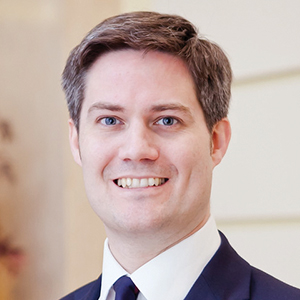
James Tumbridge & Robert Peake
Rebecca Steer
James Tumbridge